

Press Releases


How Burglars Choose Their Targets
A security operator breaks down how organized, traveling burglary crews select and enter Florida estates, and the layered defenses that actually stop a professional team.
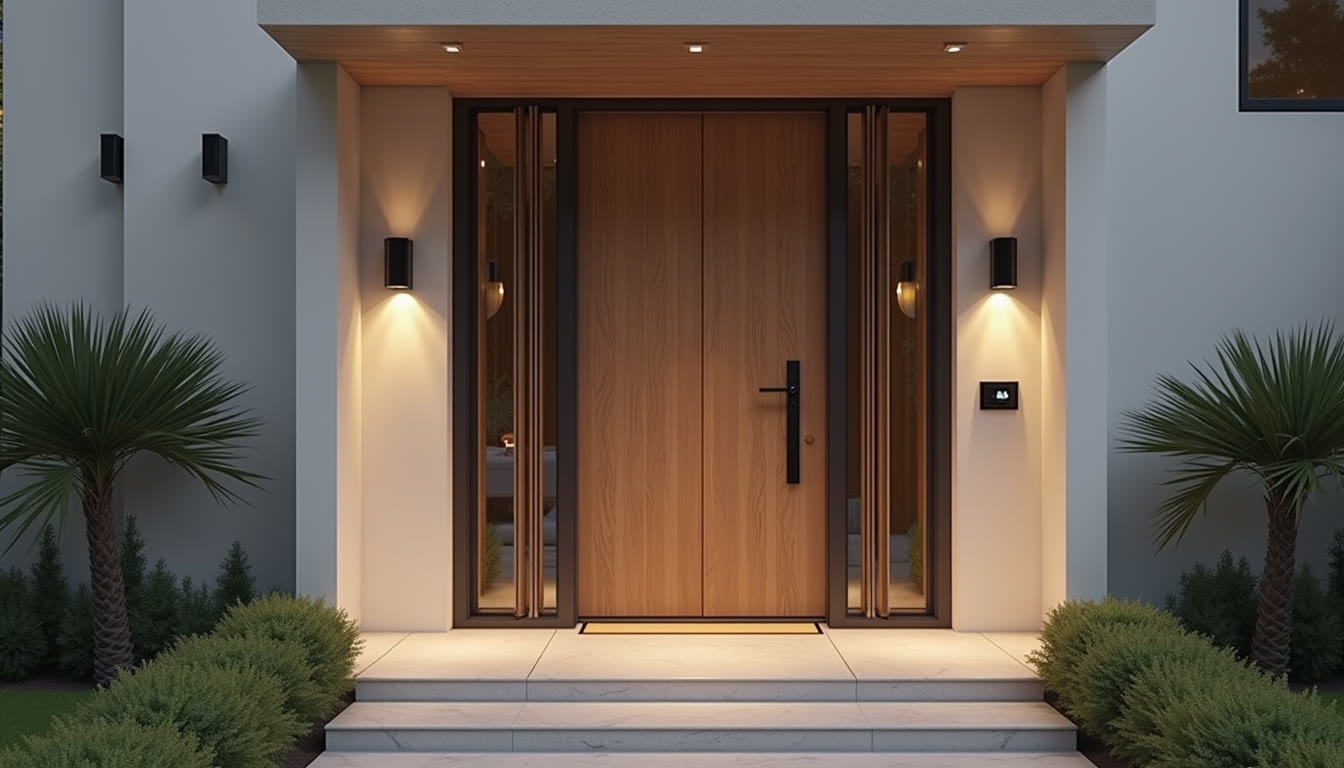
The homes that get hit are almost never chosen at random. That is the first thing I try to get across when I sit down with a family in Naples or Palm Beach who assume their gate, their cameras, and their alarm sticker have them covered. The crews now working affluent Florida corridors are not opportunists testing door handles. They are organized, mobile, and patient, professionals who study a residence for days or weeks, defeat consumer-grade security by design, and are gone before a monitoring center finishes its callback tree.
I have spent my career on the physical-security side of this problem, running protective operations, building safe rooms, and assessing estate risk for principals who are, whether they like it or not, targets. What follows is not theory. It is a working operator’s read on how these teams think, drawn from case patterns law enforcement is now documenting across the country and from the failures I see firsthand when I walk a property after an incident.
Who These Crews Actually Are
The dominant threat against high-value U.S. homes right now is what the FBI and Florida sheriffs’ offices have labeled South American Theft Groups, the phenomenon the Bureau also calls “crime tourism.” These are transnational, highly mobile teams that travel between metro areas, hit a cluster of wealthy homes over a compressed window, and rotate out before local investigators can build a pattern. Florida agencies have tied single crews to millions in stolen jewelry, gold, and cash across multiple counties in a matter of months.
Two things make them dangerous in a way the average homeowner underestimates. First, they are disciplined: burner phones, encrypted messaging, rental vehicles, and disguises are standard tradecraft, not exceptions. Second, they specialize in the away game, they strike when the residence is empty, go straight for safes and small high-value items, and have no interest in confrontation. That is cold comfort, because it means the family’s absence is the trigger, and a predictable absence is something these teams work hard to establish before they ever approach the house.
How They Select a Target
Selection is a research project before it is a crime. Crews gravitate toward homes that back onto golf courses, preserves, parks, or waterways, anything that offers a soft, unwatched approach that bypasses the front gate entirely. In one South Florida case, a network used inflatable boats to reach waterfront mansions from the canal side, sidestepping the community’s vehicle checkpoint completely. A guard booth at the entrance means nothing if the back of the property opens onto water or green space.
The digital casing is just as important. Real estate listings with full interior photo tours, tax and property records, and social media all feed a target package. A “we’re in Aspen for the week” post, a geotagged photo, a listing that shows exactly where the primary closet and safe sit, each is a gift. I tell every client the uncomfortable truth: the reconnaissance often starts on a laptop, and the family frequently supplies the intelligence themselves. Data brokers and people-search sites do the rest, tying a name to an address to a routine.
Then comes physical surveillance. Documented tactics include trail cameras hidden in trees or landscaping, cameras concealed in boxes wrapped in artificial turf and left curbside, and observation from a parked vehicle across the street, all to build what we call a pattern of life: when you leave, when the housekeeper arrives, when the pool service comes, which nights the house goes dark. Crews have blended in by jogging the neighborhood, dribbling a basketball, riding scooters, and posing as landscapers or delivery drivers. By the time a professional team commits, they know your rhythm better than you do.
How They Get In
Once a crew commits, the entry itself is fast and unsentimental. A few patterns recur:
- Second-story entry. Upper-floor windows and balconies are routinely unsecured because owners assume height is protection. Crews arrive with a ladder, go in through a second-story window, and drop straight to the primary bedroom where the jewelry and safe live.
- Force through glass and doors. When the house is confirmed empty, subtlety stops mattering. Teams break windows or force doors, move directly to the safe, and either open it on-site or carry the entire unit out.
- Defeating wireless security. This is the shift that has changed the game. Crews deploy cheap, widely available Wi-Fi jammers, some costing well under a hundred dollars, that flood the 2.4GHz band and knock every wireless device in a smart-home system offline at once: cameras, motion sensors, and any alarm panel that phones home over the internet. The footage of the break-in never uploads because the camera never reaches the cloud.
That last point is the single most important thing I can tell a Florida homeowner, and it is why I wrote separately about why cloud cameras like Ring and Nest are the weak link. A doorbell camera that streams to an app over home Wi-Fi is not a security system against a professional crew, it is a device they neutralize in seconds and then work in front of.
The Layered Defenses That Actually Stop a Professional Crew
Stopping a team like this is not about one better gadget. It is about layers that fail independently, so that defeating one does not defeat the system. When I design protection for an estate, I am building a chain in which every link assumes the previous one was broken.
1. Kill the reconnaissance advantage. The cheapest, highest-leverage defense is denying the target package. Scrub the family’s exposure on data-broker and people-search sites. Tighten social media, kill geotags, and treat travel as private information. Randomize the visible routine where you can. A crew that cannot establish a reliable pattern of life often moves on to an easier address, and there is always an easier address.
2. Make the perimeter unpredictable and watched. The goal at the property line is not an impenetrable wall, it is early detection on every approach, including the soft ones. That means treating the waterway, the golf-course frontage, and the tree line as primary threat vectors, not afterthoughts. Exterior detection that sees a person crossing the back lawn at 2 a.m. is worth more than a camera pointed at the front door a crew already knows to avoid.
3. Assume the jammer. This is the line between consumer gear and real security. A professional installation uses hardwired or PoE cameras that record locally to onsite storage, so footage exists whether or not the internet does. The alarm system uses a dedicated cellular path with encrypted signaling and anti-jam supervision, not the home router, so a Wi-Fi jammer cannot silence it, and the monitoring center is alerted the moment the signal is interfered with or the connection is cut. Independent battery backup keeps cameras, sensors, and communications alive if power is pulled. If your entire system dies when the Wi-Fi dies, you do not have a system; you have a deterrent that a professional already knows how to switch off.
4. Harden the interior, buy time and protect people. Because these crews go straight for the safe, the safe’s placement, anchoring, and rating matter as much as the alarm. And because the worst-case scenario is a crew arriving when the family is home, I build a hardened interior refuge, a properly specified safe room with an independent cellular alarm, its own power, and a direct line to responders. The point of every interior layer is the same: create enough delay that the intrusion is detected, verified, and escalated before the objective is reached.
5. Verify and respond in real time. Technology only matters if a human acts on it fast. Professional monitoring with live verification, an operator who can see the intrusion and dispatch immediately, is what compresses the response window. Against a crew that is in and out in minutes, the difference between a 45-second verified response and a five-minute callback tree is the difference between a foiled attempt and a cleaned-out safe.
For a full walkthrough of how these layers fit together into one coherent system, see our pillar guide on luxury home security in Florida. The threat landscape looks different depending on where you sit, a waterfront property in Naples presents different approach vectors than an estate in Palm Beach, and the design has to follow the terrain, not a catalog.
None of this requires living like a fortress. The families I work with want discretion, not a bunker. A well-designed estate system is nearly invisible to guests and unremarkable day to day, right up until the moment it does exactly what it was built to do. For a broader baseline on personal and household preparedness, the federal resources at Ready.gov and the infrastructure-security guidance from CISA are a sound starting point for any family that wants to understand its own risk before we ever walk the property.
FAQ
Do gated communities actually protect against these crews? Not on their own. A gate stops casual traffic, but organized crews routinely defeat perimeters by arriving via water, golf-course frontage, or trails, or by posing as delivery and maintenance workers who are waved through. The gate is one layer, and it is the one professionals plan around first. Treat the back of your property as your real front door.
If national burglary numbers are down, why worry? Because the two curves have diverged. Broad residential burglary has trended down for years, but targeted, professional break-ins at high-value homes have not [verify]. Falling averages describe smash-and-grab opportunists, not traveling crews who specifically hunt affluent addresses. If you own a high-value home, the national average is not your risk profile.
Will a Wi-Fi jammer really defeat my cameras and alarm? If your system is wireless and cloud-dependent, yes, that is exactly what these devices are for. A jammer can take every wireless component offline simultaneously, and cloud cameras never upload the footage. The countermeasure is hardwired cameras recording locally, plus an alarm on a supervised, encrypted cellular path with anti-jam alerting, so interference itself triggers a response.
What is the single highest-value thing I can do first? Reduce your digital footprint. Before any hardware, deny the crew its reconnaissance: scrub data-broker exposure, lock down social media and travel posts, and make your routine harder to read. It costs the least and removes the very intelligence these teams depend on to choose you in the first place.
A Private Assessment, Discreetly Handled
Every estate has a different set of approach vectors, blind spots, and habits a professional crew would exploit, and the only way to know yours is to walk the property with someone who has stood in the crew’s shoes. If you would like a confidential, no-pressure assessment of how your home would hold up against an organized team, request a private consultation, click to our site, or call or text us directly at (239) 710-1772. We will tell you plainly where you stand and what, if anything, is worth changing.
Written by Jonathan Kendall, COO. Jonathan has spent his career in physical security and estate risk, building protective operations, safe rooms, and layered residential defenses for high-net-worth families and principals.
Images

Images
Additional Info
Media Contact : Jonathan Kendall
Related Links : https://SDVOSB.services
Source : call or text (239) 710-1772
